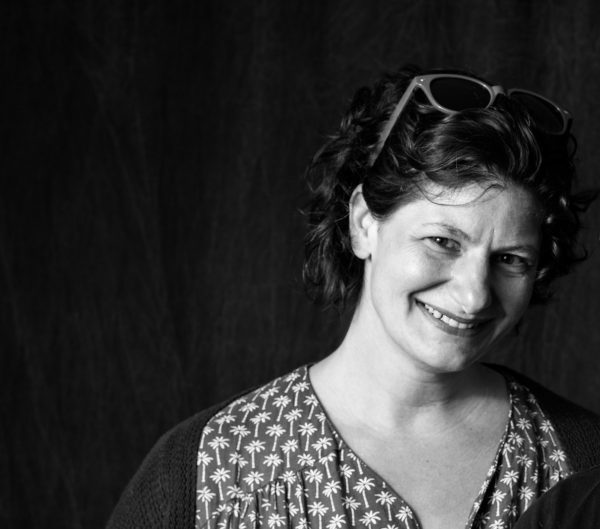
Katina Paron, MJE, has spent more than 30 years helping young people find their path through journalism. Headquartered in New York City, she is a journalism educator, editor and curriculum leader. She has created byline opportunities for teen reporters, trained journalism teachers and helped launch high school journalism programs at major institutions, including Baruch College and Northwestern University’s Medill School of Journalism. Her work has reached students through organizations and publications such as the Journalism for All initiative for Newmark Graduate School of Journalism (CUNY), the Jewish Telegraphic Agency, Journalism New England’s Career Lab and The Trace’s award-winning youth media gun violence project, “Since Parkland”. Paron has built her career centered on opening doors for young journalists and giving students the tools to tell meaningful stories.
Now this year’s Overby Adviser in Residence, the following is a Q&A exploring Paron’s perspectives on her experiences and advice in journalism education and careers.
You’ve helped many young journalists completing their first bylines and just getting their work out there. What do you think really matters most for students when they’re trying to break into the field, such as becoming an active working journalist?
“A lot of it is sticking with the story and really valuing the idea that journalism is the discipline of verification. Everything in the piece has to be true, and the reporter needs to be good enough to make sure all the elements that they’re putting in the story are not opinion, instead that they’re covering all the grounds or talking to as many people as they need to talk to. I think a lot of it goes into the reporting part of it, because the proof is in the pudding. If they have the clips to show it, then it’ll make it a lot easier for them to get hired and be part of a professional newsroom. But even at this stage, whether it’s high school or college, its about building those clips wherever they can and making sure that they’re doing the best reporting possible.”
There’s been a lot of previous work of your with various programs and initiatives. In those, what have you seen in terms of how the students are developing, and how their voices are shaping the real-world reporting when they get in the world?
“It’s interesting, because I wanna say five to 10 years, this idea of doing advocacy has gone from being something we taught young people that we don’t do in newsrooms. Then young people realize that they can make a difference in their lives and in their community, especially around issues like gun violence and education. It’s in their interest for making change, and that’s what led them to journalism. So we’re balancing this line of having them report on issues and topics that matter to them, but also fighting this old belief that advocacy journalism isn’t a thing. But I do think there’s a kind of a newer philosophy or newer approach where we can advocate for humans, advocating for people who can’t for themselves. We can make a call for justice. These are things that journalists have always advocated for and we don’t necessarily need to use the word advocacy around it, but we know that the young people we’re working with are advocates in different fields.”
“So combining that sense of wanting to make the world a better place and journalism’s quest for justice, fairness, and truth, it gets very nuanced around the idea of journalism. But I think it’s something that we can lean into more, and invite more people into the world of journalism who have something to say. In turn we can teach them, and this is what our role as educators is on how to guide them within the confines of journalism.”
Going to your experiences working with students and young reporters, how do you think that educators can better prepare students for these complex situations or serious topics?
“ I think there’s a couple of things. One is educators need to have a really high bar, not letting their students get away with things just because it’s not getting published or doesn’t matter. From my experience, I know young journalists learn through the editing process. And I think the focus can be more on mirroring that professional editor relationship and providing several rounds of edits.”
“Another is helping young journalists understand the business of journalism, like pitching a story, writing for different audiences, or working with an editor. Also, listening to your community, right? How do you involve your readers and your community into the creation of news? And that really goes to breaking down that wall of distrust.”
“And sometimes you may have to leave where you are in order to find opportunities. Encouraging people to can be a challenge, as I know family doesn’t want you to leave the state but that’s where the jobs are. There’s valid reasons why people would need to be able to live near their family of course, so I’m not devaluing that. But sometimes it’s gonna be uncomfortable for you to learn. That’s how you learn, is in that moment of discomfort. That’s what makes you a better person, reporter, or just a better part of your community.”
Would you say that the most important things for young journalists and aspiring students is stepping out of your comfort zone and building those connections any way you can?
“Exactly right. Add onto that taking advantage of opportunities. You may have to go find them, but apply for everything you can. So what if they turn you down, right? Even if you think maybe you’re not qualified, apply for things and try to meet with people. I’ve heard from journalists saying this to students that I’ve been teaching: The best time to network is when you’re a student. If you’re a student, you have everyone’s attention with the “Oh, I really wanna help you out. I have this big open heart. I wanna come help you out because you’re a student.” Take advantage of that.”
“I get emails a lot where I don’t know who the person was. I’m glad they found me, and they’re looking around, but they’re not specific enough. What are they looking for journalism? Are they what exactly? So I pointed them to some resources, but I didn’t even know who they were. Being clear about what you want, and being open at the same time to are so key. So just take advantage for what’s out there and don’t limit yourself based on geography or your own fears.”
Paron’s profile and her various works can be found below.
https://www.instagram.com/dearteenjournalist/