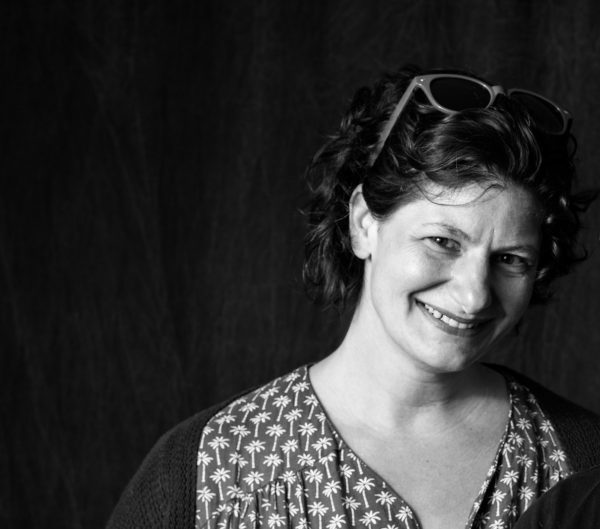
This fall’s Hamilton Keynote was delivered by Torsheta Jackson of the Mississippi Free Press on Oct. 30 at the University of Southern Mississippi. Below is the transcript of her remarks.
Good afternoon,
It feels incredible to be standing here—on the campus of the University of Southern Mississippi, the very place where my journey began. When I walked these sidewalks years ago, I never imagined that one day I’d be back here, speaking to a new generation of journalists about finding your voice and using it to change the world. But in so many ways, everything started right here.
Journey 1: Reset
I graduated from USM with a bachelor’s degree in Mass Communication, with an emphasis in Radio, Television, and Film. I had a dream of working in broadcast journalism—of telling stories that informed, inspired, and made people care. Basically, I wanted to be like Charli D’Amelio meets Under the Desk News — dance moves optional, but voice strong enough to pull in an arena of fans.
But when I graduated, breaking into broadcast journalism was harder than hitting the beat on the I Will Always Love You Drum Challenge. Jobs were scarce, and the opportunities I hoped for just weren’t there.
So I did what so many of us do when life takes an unexpected turn—I went back to what I knew.
Both of my parents were teachers. Education in our home was like Wi-Fi, always on, always necessary. Lesson plans on the kitchen table, late nights grading papers, and watching them pour themselves into their students. Teaching was familiar. It was safe.
So I stepped into the classroom, thinking it would be temporary—just until I could get back to journalism.
Plot twist: Life had other ideas.
I quickly fell in love with teaching. The classroom became my newsroom, and my students became my audience.
I taught and coached for years. Yes, 19 years. That’s almost two decades of hallway drama, bad cafeteria food, pop quizzes, and trying to explain why “because I said so” isn’t a real answer.
But during that time, I learned that education and journalism have more in common than most people think. Both are about curiosity. Both are about truth. And both are about helping people see the world differently.
But something began to stir in me again. I missed the rush of a story. I missed asking questions, writing, and seeing how words could move people to think, act, and change.
So in 2012, after years of teaching, I started freelancing for the Jackson Free Press. It felt like coming home, like finally finding the charger you’ve been searching for all week when your phone is at 1%.
Journey 2: Renewal
Freelancing reminded me that the storyteller in me was still alive. I began to write about my community—its challenges, its triumphs, its people.
From the Jackson Free Press, I went on to write for Bash Brothers Media, Mississippi Scoreboard, The Jackson Advocate, Yes! Magazine, and Eater Magazine (yes, I reviewed food…because who doesn’t love that?).
Each of those experiences helped me grow as a journalist and as a Mississippian. They deepened my understanding of this state I love and the voices that make it what it is.
But even as I was writing, I was still teaching. And after 15 years in the classroom, in 2016, those two worlds collided in the most beautiful way.
Journey 3: Reawakening
In 2021, I founded the Crusader Chronicles, an elementary school journalism publication for 3rd through 6th graders at First Presbyterian Day School.
I wanted to give my students—kids who were still learning how to spell some of their big words—a real opportunity to use their voices. I wanted them to understand that their stories mattered, even at 9 or 10 years old.
We didn’t have a fancy newsroom, expensive software, or professional cameras. We had pencils, notebooks, imagination, and a belief that truth-telling has no age requirement.
And these young journalists? They blew me away. They interviewed teachers and classmates, wrote about school events, explored their communities—and yes, sometimes debated if SpongeBob or Patrick was better at handling drama.
I saw confidence grow in kids who used to shrink from writing. I watched shy students light up when they saw their bylines in print. One of them told me, “Mrs. Jackson, I didn’t think people would care what I wrote—but they do.”
That one sentence changed everything for me.
Because that’s what journalism does—it gives people the power to be seen and heard.
Journey 4: Reignite
Then in 2021, my life took another unexpected and beautiful turn.
I went on a reporting trip with Donna Ladd, the editor and co-founder of the Mississippi Free Press. Donna and I talked a lot on that trip—about education, about community, about storytelling, about what Mississippi’s young people needed.
Somewhere between the interviews and the long car rides, she looked at me and said, “Torsheta, I think you belong in the newsroom.”
And that’s how I went from being in the classroom to being part of one of the most powerful journalistic teams in Mississippi.
That invitation changed my life.
At the Mississippi Free Press, I found a place that shared my belief that journalism isn’t just about what’s wrong—it’s also about what’s possible.
Journey 5: Resurgence
Today, I serve as the Systemic and Education Editor and the Program Manager for the Youth Media Project at the Mississippi Free Press. YMP is the BEST part of my job. It is where the two things that I love most have married – like Taylor Swift and Travis Kelce.
The Youth Media Project gives young Mississippians the tools to tell their own stories. We teach them how to report, write, investigate, and shine light in dark places.
And what they produce is powerful.
I’ve seen their stories make school districts respond. I’ve seen them challenge stereotypes about Mississippi and about youth. I’ve seen them remind adults that young people aren’t just the future—they’re the present.
Every summer, I get to witness students find their voices.
To the Students: Your Voice Is Your Superpower
Now, students—listen closely, because this is the part I came here to tell you.
You have a voice, and it matters right now.
You don’t have to wait for a degree, a title, or permission. Journalism is one of the few professions where you can start today—with your phone, your notebook, and your courage.
Ask questions. Seek truth. Tell stories that matter to you and your community.
Because what you write, record, and publish can shift perspectives and inspire change.
You are not just observers of history—you are shapers of it.
Your voice is your superpower.
I don’t mean that in a cute, motivational-poster kind of way. I mean it literally. Your voice—the words you write, the stories you tell, the questions you ask—has the power to shape how people see the world.
Think about that.
You can shift a conversation. You can expose an injustice. You can spark empathy in someone who has never experienced what you’ve lived.
You can challenge systems that were never designed for you to succeed—and force them to listen.
When you tell your truth, you are creating a ripple that will outlast you.
That’s not just journalism—that’s legacy work.
Every great movement, every great change we’ve seen in this country, started with someone daring to speak up. Someone with the courage to say, “This isn’t right,” or “This deserves to be told,” or “Here’s what really happened.”
And that “someone” doesn’t have to be a seasoned reporter with decades of experience. It could be you—today, right now—writing a story that opens someone’s eyes.
When you report with empathy, you build bridges.
When you shine light in darkness, you bring hope.
When you use your pen—or your camera, your microphone, your platform—you are doing one of the most radical things you can do: you are telling the truth.
Truth disrupts.
Truth heals.
Truth transforms.
And in a time when misinformation spreads faster than facts, we need your truth more than ever.
The world needs storytellers who care about accuracy, fairness, and people.
You have something to say that no one else can say the same way.
You see the world through your own lens—shaped by your experiences, your community, your struggles, and your dreams. That lens is your power.
Use it.
Don’t wait for permission to start. Don’t wait for someone to hand you a microphone. You already have one.
Your phone is a newsroom.
Your voice is a platform.
Your courage is the headline.
Use them responsibly.
And when people tell you that journalism is dying, remind them that truth will never go out of style.
Because as long as there are people willing to ask the hard questions, to listen deeply, and to write with heart, journalism will live—and it will thrive.
So find your story. Find your “why.”
Because once you know why your voice matters, you’ll never stop using it. I am a firm believer that it’s up to our young people—you—to do that.
To the Educators: Teach Courage Alongside Craft
To the journalism educators in the room—you have one of the most important jobs there is.
You are shaping the voices that will hold power accountable, elevate truth, and preserve democracy.
Yes, teach your students how to write a lede, how to fact-check, and how to chase down a story — but don’t stop there. Teach them why it matters.
Show them that journalism isn’t just a career — it’s a calling. It’s a way to serve their community, to shine a light, and to give others a voice.
Push your students to chase the stories that make them curious, even the uncomfortable ones. Let them ask the hard questions. And when those questions ruffle feathers, stand beside them. That’s how courage grows.
And here’s something I hope you’ll really lean into: connect your students with real journalists and real newsrooms.
And here’s something else: look for ways to get your students beyond the classroom. Partner with local newsrooms, invite reporters to visit, or find spaces where your students can collaborate with professionals in the field. Those experiences are magic. When a student sees their byline published, or their photo on a website, or hears their question asked in a press conference. They realize they belong in this space. They know they can make a difference.
And when that happens, they never stop using their voice.
To the Journalists: Reach Back, Lift Up, Light the Way.
And to my fellow journalists, this part is for you.
Reach back. Bring young people along. Invite them into your newsrooms. Let them pitch ideas, shadow you on assignments, and see firsthand what it’s like to chase a story that matters.
And here’s the key — while you’re showing them the ropes, listen to them too. They see the world in fresh ways, ask bold questions, and their perspective can make all of us better at what we do.
When generations of journalists work together, experienced and emerging, we strengthen not just the profession but the communities we serve.
We’re planting the seeds for the next generation of truth-tellers, storytellers, and change-makers — the people who will challenge, inspire, and hold power accountable long after we’re gone.
Closing: Coming Full Circle
Now, back to the most important people in the room—students. Teaching gave me empathy. Journalism gave me purpose. And bringing those together gave me power.
My English classroom, The Crusader Chronicles, the Youth Media Project, the stories I’ve told—it all comes back to one simple truth: if you want to see change, you’ve got to be willing to make it happen.
I believe in you. I believe it’s up to you. Speak with courage and conviction. Do that, and the world has no choice but to listen.
So as you leave this room, I want you to remember:
Your voice is not small.
Your story is not insignificant.
Your truth can change the world.
Keep asking questions.
Keep speaking up.
Keep creating the change you want to see.
So find your story. Find your “why.” Because once you know why your voice matters, you’ll never stop using it.
Oh Wait. Southern Miss—to the Top!