BIO
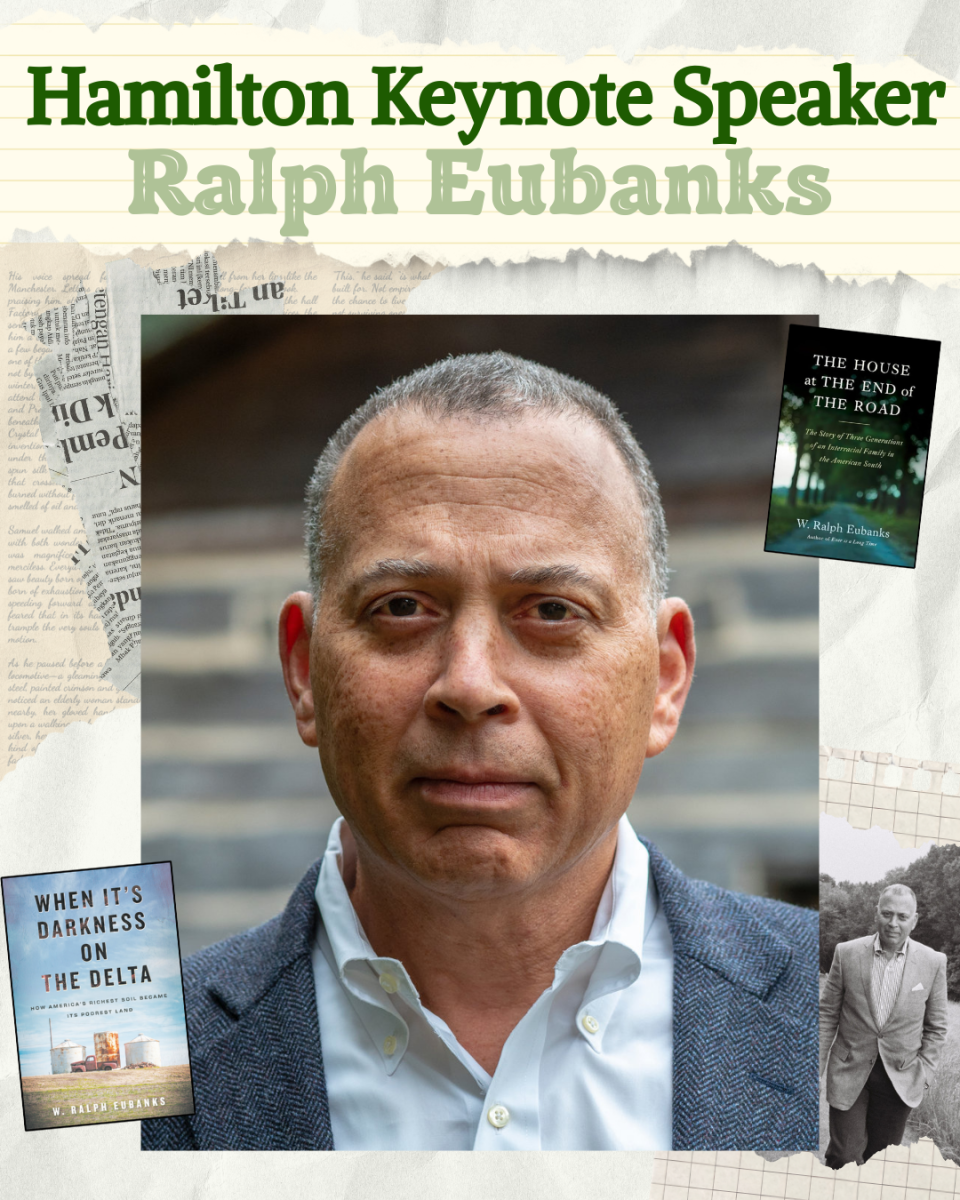
Ralph Eubanks, current faculty fellow and writer-in-residence for the University of Mississippi’s Study of Southern Culture, is a writer whose work details the American South’s history on race, culture, and literature. Growing up on a farm outside of Mount Olive, MS, Eubanks attended the University of Mississippi where he achieved his undergraduate degree, and then a graduate degree at University of Michigan. Eubanks’ career as an editor has included the director of publishing for the Library of Congress from 1995-2013, and the University of of Virginia’s Virginia Quarterly Review. After leaving Virginia, Eubanks returned to Mississippi, teaching at Millsaps College, where he developed more of his writing about the South and Mississippi.
Eubanks says while it was not completely unexpected he transitioned to writing from working in editing, it has been a change in roles, where he is focusing in on his own work after doing so for others. He describes himself as an “outsider who is also an insider”, writing about Mississippi with a unique perspective. Since his writing has taken off, he has authored four nonfiction books. During his career, Eubanks’ has been recognized with accolades and had his work published in well-known outlets, with one of the most recent achievements being the Mississippi Governor’s Arts Award in 2023.
Q&A
Your work explores identity, history, and culture in the South. What drew you to writing about these themes, and why do you think they remain important today?
“ I think the most important thing was silence. There are things that people didn’t necessarily talk about with a great deal of openness. I always say that finding good stories in Mississippi means probing those silences. So that’s another thing that I felt was really important was to find the stories that people were silent about. I’m not someone who really is prescriptive in what I think Mississippi should do, but it is looking at the questions, to examine them, and to present what we should be discussing much more closely. Do I have the answers to those questions? No, but I think they are important to ask, because that’s the other thing. We’re often silent about the things that we should be asking ourselves that are sometimes hard questions.”
You’ve written extensively about the South and its past. How do you think in understanding the South’ history, it helps people better understand issues we see today?
“ I’ve said numerous times lately we are living in the ‘United States of Mississippi’. I see echoes of my childhood in Mississippi. We often feel the need to dance around issues of race, and identity, and equity. I guess the thing for me I keep coming back to is that Mississippi is a mirror for America. It is a way that we can understand the rest of the country because we have been through so much as a state, as a society. Where is that past mirrored in what is happening today? And I think this way because our cultural memory in this country is short, which is just the nature of American exceptionalism. But by having that very robust discussion, we can potentially keep the really horrible parts of our past from entering the present.”
Looking at your career as a writer and scholar, what experiences or moments have most shaped the way you approach your work and stories?
“I’d say there are really two things that shaped my work. First, it is a love of history, of learning new things about the past. Research is a big part of my work, and I’d say that really goes back to my time working at the Library of Congress, working with archivists and librarians and realizing how they could help you understand the past in ways that others couldn’t. Second, it’s also been that I like to look at the real world landscape, almost like an archival source. Think about a rusting cotton gin in the Mississippi Delta, and there are other things that surround it. That’s where you see a little church, a vast cotton field where there were once people living in sharecropper shacks. You begin to look at that and kind of ‘excavate’ what’s on the landscape, building your own archive, and questioning why they’re even on the landscape.”
What kind of advice or beliefs about storytelling and media would you like to share to young people, namely interested students?
“I think probably the most important thing for a young person today is media literacy, and that’s understanding the sources of the information that you are are taking in. Who created this? Where did it come from? Was it created by a human being? There’s so many different questions that I think young people have to deal with today that even I didn’t. We have a much more complicated media landscape now. But it’s really trying to discern the things that are really rich from what is just the noise, and that is probably most important. An example is last semester when I taught a class on the Civil Rights Movement. There was a research project at the end, and what I found really changed my students was their connection to the archival material. I remember students saying they held pieces of paper in their hands so old they couldn’t believe they were actually holding it. They felt this tactile connection to the past. I think that tactile connection is incredible, and an essential part of becoming a good storyteller.”
Eubanks will deliver the Keynote speech as part of the the Mississippi Scholastic Press Association’s annual spring convention Tuesday, March 31, on the campus of the University of Mississippi.